Exchange Barter Evolution Characteristics Currency Banking Quiz Short Ans Summary NCERT Qs
0 / 6 sections
0%
Chapter 11 · NCERT 2025-26

From Barter to Money

Exploring Society: India and Beyond · Part 1

1. Why Does Exchange Exist?

No one can produce everything they need

👥 Specialisation & Surplus

Key Fact
Exchange exists because no single person can produce everything they need. Specialisation → Surplus → Exchange — this is the engine of every economy.

2. The Barter System

Direct exchange of goods/services — no money involved

🤝 What is Barter?

Barter = trading one good or service directly for another, without money.

Example: Farmer gives 10 kg rice → Weaver gives 5 m cloth. Both get what they need. No money changes hands.

✅ Advantages of Barter

⚠️ Problems with Barter
1
👨‍🌾 ❌ 👩‍🎨
Double Coincidence of Wants ⭐ (Most Important!) Both people must want exactly what the other has. A farmer with rice must find someone who has cloth AND wants rice — very hard!
2
🍚 ❓ 🧶
No Common Measure of Value How much rice = 1 m cloth? No standard unit. Every trade needs fresh negotiation.
3
🦼 💥
Durability Problem Barter goods rot and spoil — rice rots, bananas brown, fish smells. They don't last. Money is durable and can be stored as wealth for the future.
4
🐄 🚫
Indivisibility Problem Want shoes worth "half a cow"? You can't cut a live cow in half! Big goods can't be split for small purchases.
5
🐄 🛒
Portability Problem Barter goods are heavy and hard to carry. You can't take a cow or 50 kg of grain to the market easily. Money fits in your pocket!
🚨 Don't Miss — Exam Favourite
Double Coincidence of Wants
The biggest problem with barter. Both traders must want exactly what the other has, at the same time. Money solves this — everyone accepts money, so you only need a single coincidence (someone who wants what you sell).

3. Evolution of Money

How exchange systems evolved over thousands of years

🕑 The Journey of Money  👈 scroll to see all

🌾
Commodity Money Ancient times Cattle, grain, shells, salt, cloth
🥇🥈
Metallic Money ~3000 BC Gold & silver bars, weighed each time
🪙
Coined Money ~600 BC Stamped coins, Lydia (Turkey)
💴
Paper Money ~1000 AD China Song Dynasty, backed by gold
💵
Fiat Money Modern era Govt. backed notes & coins, no gold link
📲
Digital Money 21st century UPI, cards, net banking, e-wallets
Key Fact
The word "salary" comes from Latin "salarium" — Roman soldiers were paid in salt! Salt was so valuable it was used as commodity money.

💰 Why Metallic Coins Replaced Commodity Money

4. Characteristics of Good Money

What makes something suitable to use as money?

🧱
Durability
Lasts long without decaying. Metal and paper survive years of use.
🏎
Portability
Easy to carry. A coin fits in your pocket — a cow doesn't!
✂️
Divisibility
Can be broken into smaller units (₹1 = 100 paise) for any purchase size.
⚖️
Uniformity
Every ₹10 coin is identical — same weight, size, and value.
🤝
Acceptability
Everyone in the economy accepts it as payment without question.
🔓
Scarcity
Not available in unlimited supply — otherwise it would lose value.

📈 Functions of Money

FunctionMeaningExample
Medium of ExchangeUsed to buy & sellPay ₹50 for a book
Unit of AccountCommon measure of valueBook = ₹50, pen = ₹10
Store of ValueSave now, spend laterSave ₹500 this month
Standard of Deferred PaymentBasis for loans & creditBorrow ₹1000, repay next month

📚 Key Terms — Simple Meanings

TermSimple Meaning
Money Anything that people accept in exchange for goods and services. It makes buying and selling easy — you don't need to find someone to barter with.
Transaction An exchange between a buyer and a seller — when you give money and get a good or service in return. Every purchase is a transaction.
Commodities Goods that are produced and traded — like wheat, rice, salt, and cloth. In ancient times, commodities themselves were used as money (commodity money).
Common Standard Measure of Value A single unit (like the Rupee ₹) used to express the price of every good and service. So we can easily compare — a book costs ₹50, a pen costs ₹10. Without it, we'd need millions of barter exchange rates!
Divisibility The ability to divide money into smaller units to pay the exact amount. Example: ₹1 = 100 Paise. You can pay ₹12.50 exactly. In barter, you can't cut a cow in half!
Portability The ability to carry money easily from place to place. A few coins or notes fit in your pocket. Try carrying 10 kg of rice or a cow to the market!
Standard of Deferred Payment Money can be used to pay later. If you borrow something today, you promise to return the money in the future. Example: You take a loan of ₹1000 today and repay it next month. In barter, you can't promise to "pay back in rice" easily — rice may rot or its value may change!
Minting The process of making coins officially. Coins are made in a special factory called a Mint. The government controls minting so that every coin has the correct weight, metal, and design. India has mints in Mumbai, Kolkata, Hyderabad, and Noida.
Alloy A mixture of two or more metals. Coins are often made from alloys — for example, mixing copper and nickel — to make them stronger and longer lasting than using a single metal alone.

5. Indian Currency & RBI

History of the Rupee and India's central bank

Maurya Empire (~300 BC)
🧂 Karshapana — Punch-Marked Coins
Silver coins punched with symbols. Used across the Maurya Empire under Chandragupta & Ashoka.
1540–1545 AD
💰 Sher Shah Suri — The Silver "Rupiya"
Introduced the standardised silver "Rupiya." This is where the word Rupee comes from!
1 April 1957
🔢 Decimal System Adopted
India changed to 1 Rupee = 100 Paise (from the old system: 1 ₹ = 16 Annas = 64 Paise).
2010
₹ Official ₹ Symbol Adopted
Designed by Udaya Kumar from IIT Bombay (Mumbai) — blends Devanagari "Ra" (र) with Roman "R". The two parallel horizontal stripes at the top represent the national flag and the "equal to" sign.
May 2023
🚫 ₹2000 Note Withdrawn
RBI withdrew ₹2000 notes from circulation. Deadline to deposit: 30 September 2023.

🤔 Did You Know?

🪐 Notable Ancient Indian Coins

DynastyCoinSymbolPeriod
Chalukyas of Kalyana Gold & copper coins Varaha (avatar of Vishnu) + Royal Parasol — symbols of royal power and divine authority 10th–12th century CE
Cholas Silver coins Tiger — the royal emblem of the Chola dynasty 850–1279 CE

💡 Coins were not just money — they carried the symbols of royal power and religious identity of the ruling dynasty. A coin's design told people who was king and what they stood for.

🌎 Roman Gold Coins in India

Fig. 11.12 — Roman gold coins excavated at Pudukottai, India

Roman gold coins have been found at many sites in South India, including Pudukottai. This shows that ancient India traded with the Roman Empire — Indians exported spices, cloth, and gems to Rome in exchange for gold coins.

🌎 This proves India was part of a global trade network even 2,000 years ago. Foreign coins circulating in India show how widely money was accepted across borders.

🏭 Reserve Bank of India (RBI)

💰 Denominations of Indian Currency

Denomination = the face value printed on a note or coin (e.g. ₹10, ₹50, ₹500)

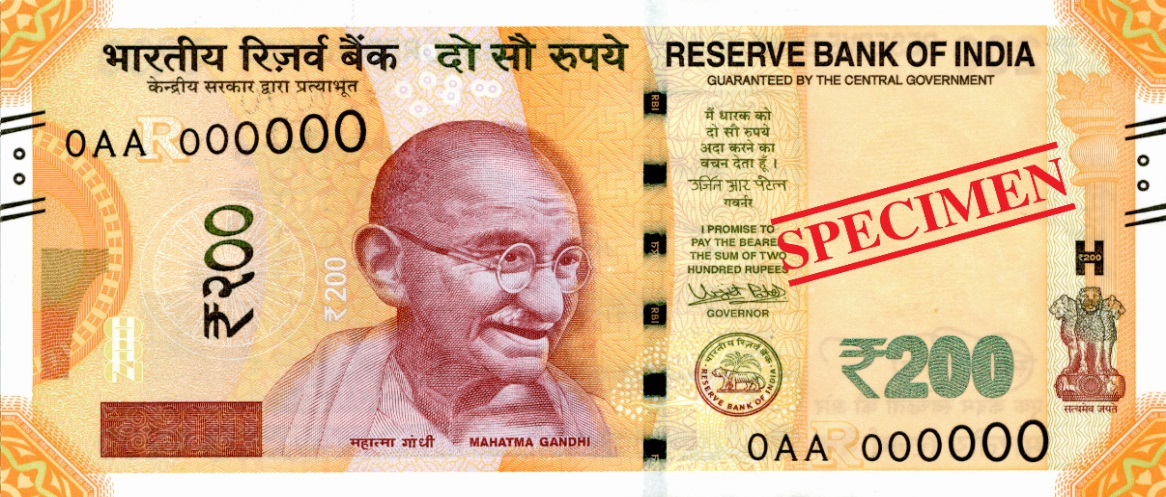
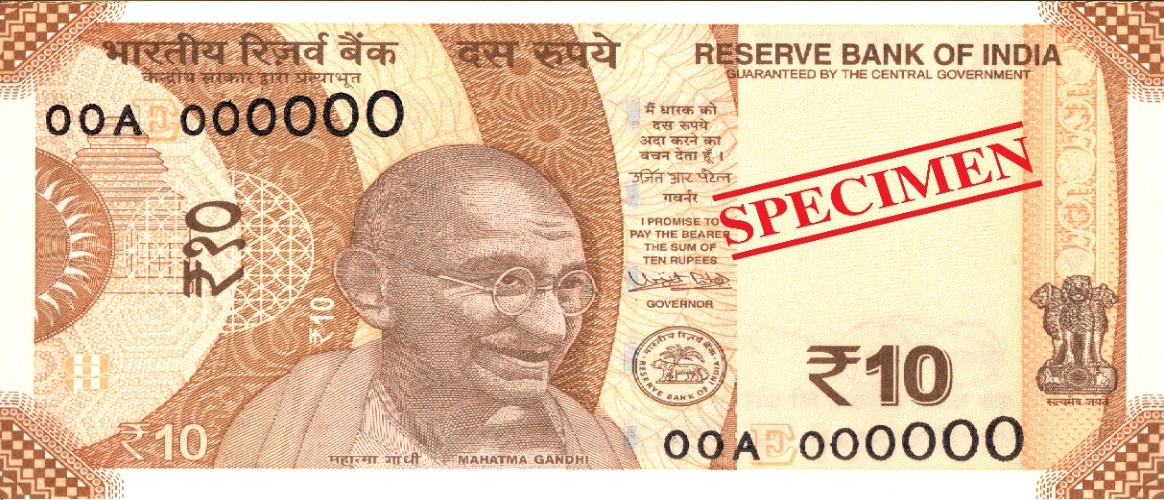
💰 Coins (Govt. of India): ₹20  ·  ₹10  ·  ₹5  ·  ₹2  ·  ₹1

📌 The ₹1 note is issued by the Government of India (signed by Finance Secretary, not RBI Governor).

🚨 Don't Miss
Who Issues What?
RBI issues all currency notes (₹10, ₹20, ₹50, ₹100, ₹200, ₹500). Government of India issues all coins and the ₹1 note. This distinction is a common exam question!

6. Banking & Digital Payments

How banks work and how we pay digitally

🏭 Types of Bank Accounts

AccountFor whom?Interest?Withdrawals
SavingsIndividuals / families~4% p.a.Limited / flexible
CurrentBusinessesNoneUnlimited
Fixed Deposit (FD)Anyone with lump sumHighest (6–7%)Locked for a period
Recurring Deposit (RD)Regular monthly saversModerateAfter maturity

📈 How Banks Earn Profit

📲 Digital Payments in India

MethodFull Form / Key Fact
UPIUnified Payments Interface — instant, launched April 2016 by NPCI
NEFTNational Electronic Funds Transfer — batch processing, any amount
RTGSReal-Time Gross Settlement — real-time, min ₹2 lakh
Debit CardUses YOUR money directly from bank account
Credit CardBank pays now, you repay later
ATMAutomated Teller Machine — cash withdrawal without teller

💡 Tangible vs Intangible Money

TypeMeaningExamples
Tangible MoneyCan be touched and feltCoins, paper notes
Intangible Money (Digital)Cannot be touched — exists in electronic formUPI, debit card, net banking
🌿 Real-Life Example: Krishnappa sells seasonal fruit from a cart. Next to his fruit he keeps a small card with a QR code. Customers scan it with their phone and pay digitally — the money goes straight into his bank account, without any coins or notes changing hands!

🌏 New Forms of Money

Money today is not just notes and coins — it exists in many new forms:

FormWhat it is
Cheque A written instruction to your bank to pay a specific amount to someone. No cash needed.
Demand Draft (DD) A prepaid payment order issued by a bank. Guaranteed payment — cannot bounce.
Debit Card A card linked to your bank account. Money is deducted instantly when you pay.
Credit Card Bank pays on your behalf now. You repay the bank later (with interest if delayed).
Mobile Wallet Apps like Paytm, PhonePe, Google Pay — store money digitally on your phone.
QR Code Quick Response code — a square black-and-white pattern that stores the receiver's bank account information. Scan it with your phone camera → payment goes directly into the seller's bank account instantly!

📷 How QR Code Payment Works — Step by Step

UPI Pay
Scan QR Code
Point camera at
the QR code
Step 1: Scan
UPI Pay
🛒 Rohan's Shop
rohan@upi
Enter Amount
₹ 50.00
PAY NOW
Step 2: Enter ₹
UPI Pay
Enter UPI PIN
4-digit secret PIN
Paying ₹50 to
Rohan's Shop
Step 3: PIN
UPI Pay
Payment
Successful!
₹50
Paid to Rohan's Shop Instantly! ⚡
Done! 🎉

✍️ Quick Quiz — Test Yourself!

📝 Short Answer Questions

1 Mark Questions
Q1. What is the word for money in Tamil, Telugu, and Malayalam? 1 Mark
The word for money in Tamil, Telugu, and Malayalam is paṇaṁ — a variation of the ancient word 'paṇa'.
Q2. What is the word for money in Kannada? 1 Mark
The word for money in Kannada is haṇa — also derived from the ancient word 'paṇa'.
Q3. Name the two metals used to make ancient coins. 1 Mark
Ancient coins were made from alloys of silver and copper.
Q4. What is an alloy? 1 Mark
An alloy is a mixture of two or more metals. Alloys are stronger and more durable than a single pure metal.
Q5. Name any one material found in modern coins other than iron. 1 Mark
Modern coins contain chromium (also accept: silicon or carbon) along with iron.
Q6. What is a commemorative coin? 1 Mark
A commemorative coin is a special coin minted by the government to mark an important national event, such as the birth centenary of a great leader or a historic occasion.
Q7. How many annas made one rupee in the old Indian currency system? 1 Mark
16 annas made one rupee in the old system (before 1957). So 1 anna = 1/16 of a rupee.
Q13. What is digital money? 1 Mark
Digital money is money that exists in electronic form. It is intangible — you cannot touch or feel it. Examples include UPI payments, debit cards, and net banking.
Q14. What does QR stand for? 1 Mark
QR stands for Quick Response. A QR code is a collection of black and white squares that stores the receiver's bank account information and can be scanned by a smartphone.
Q15. Give one example of a digital payment method. 1 Mark
Any one of: UPI (Unified Payments Interface), debit card, credit card, net banking, or mobile wallet (e.g. Paytm, PhonePe).
Q10. What is currency? 1 Mark
Currency is the system of money used in a particular country. For example, coins and paper notes used in India in terms of the Rupee (₹) is the Indian currency.
Q11. What is meant by denomination? 1 Mark
Denomination is the unit in which coins and paper notes are classified. For example, ₹10, ₹50, ₹100, ₹500 are different denominations of Indian currency.
Q12. Why did carrying a large number of coins become a problem? 1 Mark
A large number of coins was heavy and difficult to carry. Storing them also became a problem. This led people to look for a better alternative — paper money.
Q8. From which institute was the designer of the ₹ symbol? 1 Mark
The ₹ symbol was designed by Udaya Kumar from IIT Bombay (Indian Institute of Technology, Mumbai).
Q9. What do the two parallel horizontal stripes on the ₹ symbol represent? 1 Mark
The two parallel horizontal stripes represent the national flag and also the "equal to" sign.
2 Mark Questions
Q6. What are modern coins made of? Name any two materials used in them. 2 Marks
Modern coins are made of alloys consisting largely of iron. They also contain other materials like chromium, silicon, and carbon in precise proportions.
Q7. Why are coins made from alloys and not from a single metal? 2 Marks
Coins are made from alloys because alloys are stronger and longer lasting than a single pure metal. They resist wear and tear better, making coins more durable for everyday use.
Q9. India changed to the decimal currency system in 1957. What was the old system? Why was the change made? 2 Marks
In the old system, 1 Rupee = 16 Annas. In 1957, India switched to 1 Rupee = 100 Paise. The change was made because the decimal system is much easier to calculate and use in daily transactions.
Q8. The word 'paṇa' is still used in Indian languages today. Give two examples. 2 Marks
(1) Tamil, Telugu, and Malayalam use paṇaṁ. (2) Kannada uses haṇa. This shows the concept of money has very ancient roots in India.
Q10. Describe the ₹ symbol. Who designed it and what does it represent? 2 Marks
The ₹ symbol was designed by Udaya Kumar from IIT Bombay and adopted in 2010. It is a mix of Devanagari "Ra" (र) and Roman "R". The two parallel horizontal stripes at the top represent the national flag and the "equal to" sign.
Q11. Why did paper money replace coins? Give two reasons. 2 Marks
(1) A large number of coins was heavy and difficult to carry. (2) Storing coins was also a problem. Paper money is light, easy to carry, and can represent large values in a small note.
Q12. What is the difference between currency and denomination? Give one example of each. 2 Marks
Currency is the system of money used in a country — e.g., the Rupee (₹) is India's currency. Denomination is the face value of a coin or note — e.g., ₹100 is one denomination of Indian currency.
Q13. What is digital money? Give two examples of digital payment methods. 2 Marks
Digital money is money that exists in electronic form and cannot be touched. It is an intangible form of money. Examples: (1) UPI — transfers money instantly between bank accounts. (2) Debit Card — deducts money directly from your bank account.
Q14. Distinguish between tangible and intangible money with examples. 2 Marks
Tangible money can be touched and felt — e.g., coins and paper notes. Intangible money cannot be touched — it exists in electronic form — e.g., UPI payments, net banking, and debit cards.

📚 Chapter Summary

📚 NCERT Exercise Questions

Q1. How does the barter system take place and what commodities were used for exchange? Answer
In the barter system, goods and services are exchanged directly without using money. Both parties must want what the other has (double coincidence of wants).

Commodities used:
  • Agricultural goods: grain, rice, wheat, salt
  • Animals: cattle, goats
  • Natural items: cowrie shells, fish
  • Craft goods: cloth, pottery, tools
Q2. What were the limitations of the barter system? Answer
  • Double Coincidence of Wants: Both traders must want exactly what the other has — very difficult to find.
  • No Common Measure of Value: No standard unit to compare prices — every trade needed fresh negotiation.
  • Durability Problem: Goods like grain and fish rot and spoil — cannot be saved as wealth.
  • Indivisibility Problem: Large items like a cow cannot be divided for smaller purchases.
  • Portability Problem: Heavy goods are difficult to carry to the market.
Q3. What were the salient features of ancient Indian coins? Answer
  • Made from silver, gold, and copper alloys for durability.
  • Carried symbols of royal power and religious identity — e.g., Chalukya coins had the Varaha symbol; Chola coins had the tiger emblem.
  • The Karshapana (Maurya Empire) were punch-marked silver coins — among the earliest standardised Indian coins.
  • Coins were stamped by rulers to guarantee weight and purity — no need to weigh each coin.
  • Roman gold coins found at Pudukottai prove Indian coins were part of international trade 2,000 years ago.
Q4. How has money as a medium of exchange transformed over time? Answer
Money evolved through these stages:
  • Commodity Money: Cattle, grain, shells, salt used as money (ancient times).
  • Metallic Money: Gold and silver bars, weighed each time (~3000 BC).
  • Coined Money: Stamped coins with fixed weight and value (~600 BC).
  • Paper Money: First used in China (~1000 AD); introduced in India in the late 18th century.
  • Fiat Money: Government-backed notes and coins with no gold link (modern era).
  • Digital Money: UPI, debit/credit cards, net banking — intangible, electronic form (21st century).
Q5. What steps might have been taken in ancient times so that Indian coins could become the medium of exchange across countries? Answer
  • Standardisation: Coins had fixed weight and purity so foreign traders could trust their value.
  • Royal guarantee: The king's stamp on a coin assured its authenticity — accepted even in foreign lands.
  • Trade routes: India's spice trade and the Silk Route connected India with Rome, Arabia, and Southeast Asia — Indian coins travelled with merchants.
  • Quality metals: Indian coins used high-quality gold and silver, universally valued everywhere.
  • Trade agreements: Ancient kingdoms likely had agreements allowing each other's coins to be used in transactions.

💡 Evidence: Roman gold coins found at Pudukottai prove ancient India was part of a global trade network.

Q6. Arthashastra — What is the value of one paṇa? What does the fine tell us about human values? Answer
Given: Annual salary = 60 paṇas  |  Fine for not helping a neighbour = 100 paṇas

Value of one paṇa: Since 60 paṇas = a full year's salary, one paṇa was a significant amount — roughly equal to about 6 days' worth of grain for 4 meals.

Conclusion about human values: The fine of 100 paṇas was more than one and a half times the annual salary. This shows that in ancient India, helping neighbours and community responsibility were considered extremely important. Such a heavy fine was used to enforce social duty — neglecting a neighbour in need was treated as a serious offence.
Q7. Activity — Write and enact a skit: persuading people to use cowrie shells as medium of exchange. Activity
Skit Guidelines:
  • Create characters: a farmer (with grain), a potter (with pots), a weaver (with cloth).
  • Show the problem: farmer wants a pot but the potter doesn't want grain — barter fails!
  • Introduce cowrie shells as a solution: everyone agrees to accept them as common payment.
  • Show why shells work: portable (fits in hand), uniform (each looks similar), widely accepted.
  • End with all three trading successfully using cowrie shells.

Key idea to show: People needed to trust the medium — shells had no food value but everyone agreed to accept them, making trade easy.

Q8. Activity — Find out the security features RBI uses on currency notes to prevent illegal printing. Activity
Security Features to Research & Discuss:
  • Watermark: Gandhi's portrait visible when the note is held up to light.
  • Security Thread: A vertical strip embedded inside the note — glows under UV light.
  • Intaglio Printing: Raised print you can feel by touch — helps visually impaired identify denominations.
  • See-Through Register: Floral pattern visible from both sides when held to light.
  • Colour-Shifting Ink: The numeral on ₹500 changes colour when tilted (green ↔ blue).
  • Microprinting: Tiny text on the note, invisible to the naked eye.

Discuss: Why is it important to prevent counterfeit notes? What happens to an economy if fake notes circulate?

Q9. Activity — Interview family members and shopkeepers: cash or UPI — which do they prefer and why? Activity
How to conduct your interview:
  • Ask at least 3–4 people: a grandparent, a parent, a local shopkeeper, and a young person.
  • Questions to ask: Do you prefer cash or UPI? Why? Have you ever had a problem with either?
Likely findings:
  • Elderly: May prefer cash — familiar, no phone/internet needed, works everywhere.
  • Young people: May prefer UPI — fast, no change needed, easy to track spending.
  • Shopkeepers: UPI avoids change problems; cash works even without internet.

Think about: What are the advantages and disadvantages of a cashless economy?